








Every season, growers ask me the same question: is a greenhouse actually worth it? My answer is always the same, it depends entirely on what you put inside it.
A greenhouse is not a magic box that makes everything more profitable. It’s a controlled environment that rewards technique. Give it a crop that thrives under heat, trellising, and intensive spacing, and you’ll out-produce the field by a wide margin. Give it the wrong crop, and you’ve just built an expensive shed.
Over the years, in my own greenhouses at Les Jardins de la Grelinette and at Ferme des Quatre-Temps, I’ve tested pretty much everything you can grow under plastic.
Five crops consistently rise to the top:
- Tomatoes
- Cucumbers
- Peppers
- Eggplants
- Pole beans
Each one behaves differently in a heated structure, and each rewards a specific set of techniques that most gardening books simply don’t cover. That’s exactly the kind of detail we drill down into in the Masterclass, because knowing what to grow is only half the equation. Knowing how is where the real profit lives.
Here’s how I break down the field-to-greenhouse decision for each of these five crops.
We also made a video on this topic, check it out :
Tomatoes: The Biggest Cash Crop, Full Stop
When grown right, greenhouse tomatoes are the single most profitable crop in a market garden. In the field, a tomato plant gives you a few months of production. In a heated greenhouse, an indeterminate plant with two grafted heads will produce for 6 to 7 months straight, transplanted in mid-March and harvested clean through October.
The technique that changes everything here is the lower-and-lean method: instead of staking plants vertically, you trellis each head to a wire and lower the plant weekly as it grows, letting it snake along the bed instead of racing toward the roof. Combine that with grafting onto Maxifort rootstock for disease resistance and vigor, and a proper EC-tested fertilization program every two weeks, and you’re looking at a completely different yield curve than anything the field can offer. This single crop alone can justify heating an entire structure.
And if you’d rather see the technique in motion, watch this video :
Cucumbers: The Reliable Weekly Seller
Cucumbers may not get the same attention as tomatoes, but they deserve it. The English and Lebanese varieties I grow are parthenocarpic, meaning they set fruit without pollination. That allows us to screen the entire greenhouse against insect pests with fine mesh over every vent, roll-up side, and doorway, while still maintaining full yields. There is no need to let bees in and out, and no tradeoff between excluding pests and ensuring pollination. It is a technical advantage that field production simply cannot offer.
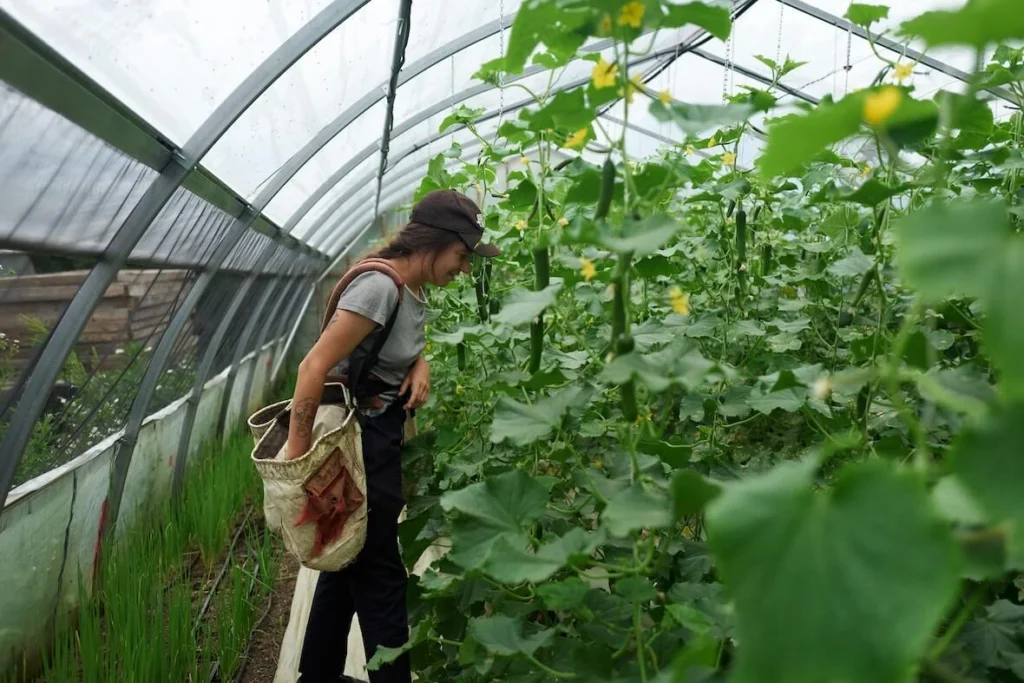
We get our Kalunga and Katrina seed from Johnny’s Selected Seeds in North America, French growers can find the same varieties through Agrosemens.
The two best techniques for greenhouse cucumbers are succession planting and modified umbrella trellising. Transplant a new generation every eight weeks so the next crop begins producing just as the previous one starts to decline. This keeps harvests continuous, with no gaps and no dead weeks at market.
For trellising, train the main stem up and over the wire, then allow three side shoots to cascade back down. This modified umbrella system helps the plant manage its own density and reduces the need for constant retraining. Pair it with a misting system to help control spider mites, and cucumbers become one of the most reliable, low-maintenance crops in the greenhouse.
 Want the exact step-by-step diagram we use on our own farm?
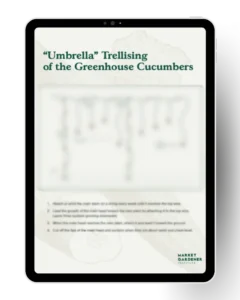
Download the free Umbrella Trellising cheat sheet, it’s the same one our crew keeps pinned in the greenhouse.
Peppers: Patience Pays
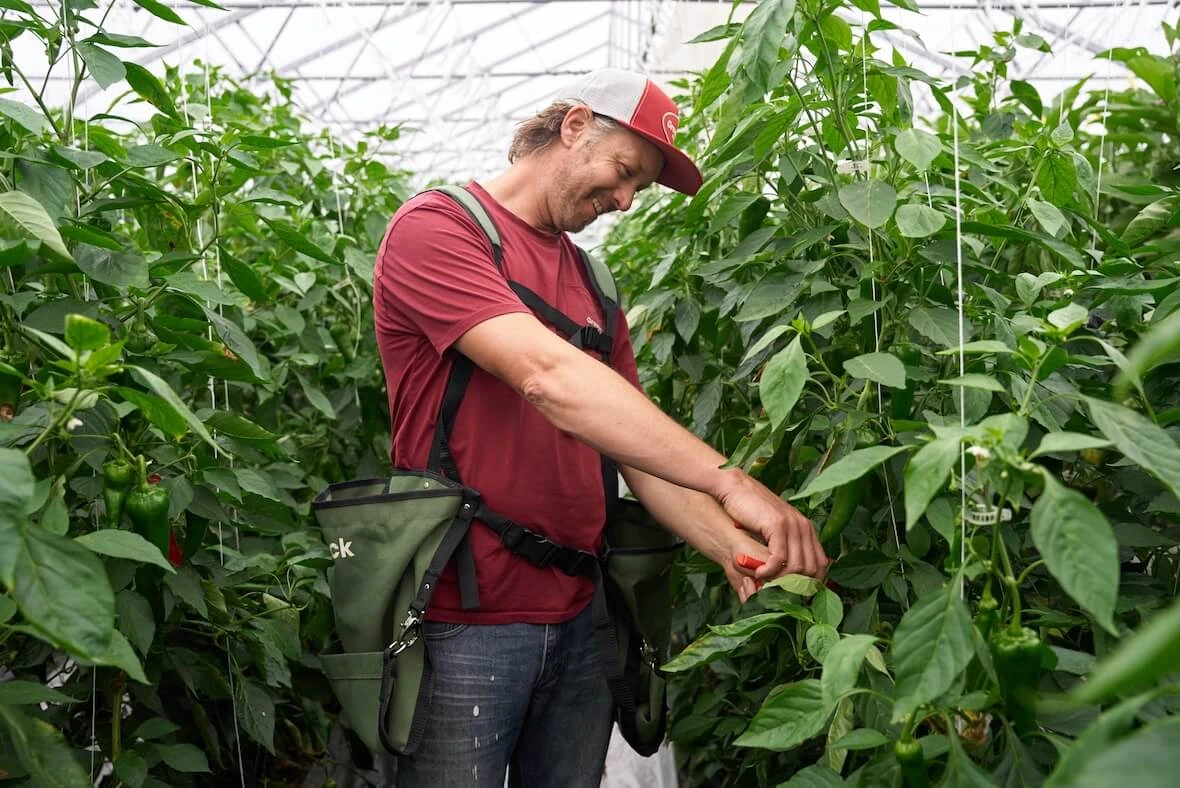
Peppers are often the crop growers give up on too early, and that’s a mistake. They’re technically demanding, slow to establish, and unforgiving of stress, but a well-managed pepper crop stays productive for 6+ months from a single generation.
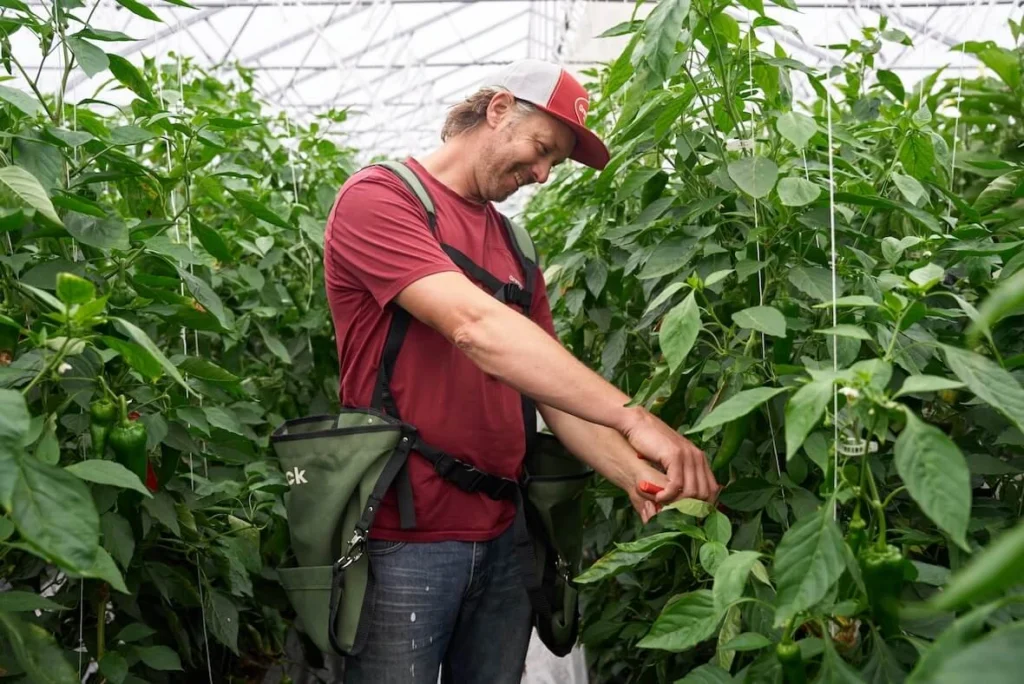
The real secret is selective pruning to two heads per plant, keeping one fruit per node and three leaves per sucker before pinching the tip. Those leaves aren’t decoration, they’re solar panels that protect the fruit from sunburn while feeding the plant. Add bumblebees for pollination and larger fruit size, and a tight EC-based fertilization schedule to prevent blossom end rot (Escamillo and Carmen cultivars are especially sensitive), and you’ve got a crop that rewards discipline with a very long, very profitable harvest window.
Eggplants: The Advanced Move
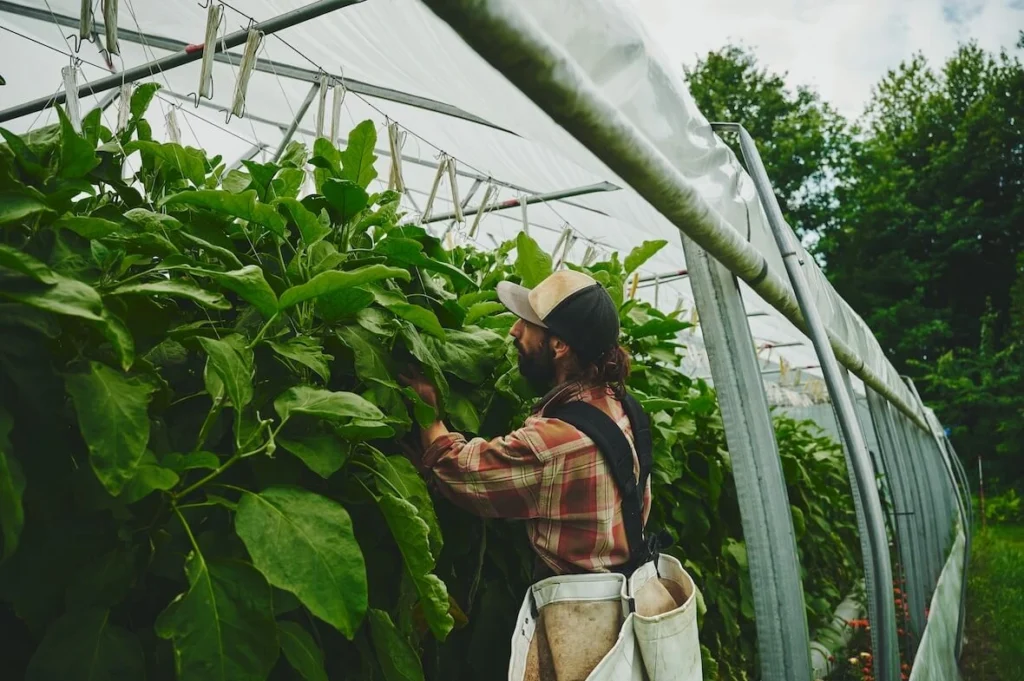
If tomatoes, cucumbers, and peppers are your core greenhouse curriculum, eggplants are the graduate course. We graft ours onto tomato rootstock for disease resistance and a real jump in yields, and we let each plant develop into three heads instead of two, chosen gradually as the plant grows rather than all at once.
The technique that separates amateur eggplant growers from pros is sucker management: on each sucker, you keep two flower clusters, prune down to one fruit per cluster, and remove the growing tip right after the second cluster. Miss this step for even a week or two and the plant turns into an unmanageable jungle. Get it right, and eggplants become one of the most rewarding crops in the whole operation, both technically and financially.
Pole Beans: The Space-Filler With a Purpose
Pole beans won’t out-earn your tomatoes, but they’re not meant to. They’re a market magnet. Customers who buy your beans buy everything else at your stall too. If you’ve got spare greenhouse space and a few extra weeks before your next big crop goes in, pole beans fill that gap productively.
Grown on a Hortonova trellis or simple strings, they’ll produce for 6 to 10 weeks off a single planting, and because they’re self-pollinating, there’s zero pollination management required. Plan a spring generation to be first to market, then a fall generation once field temperatures drop too low, with bush beans filling the field gap in between.
Field vs. Greenhouse: The Real Comparison
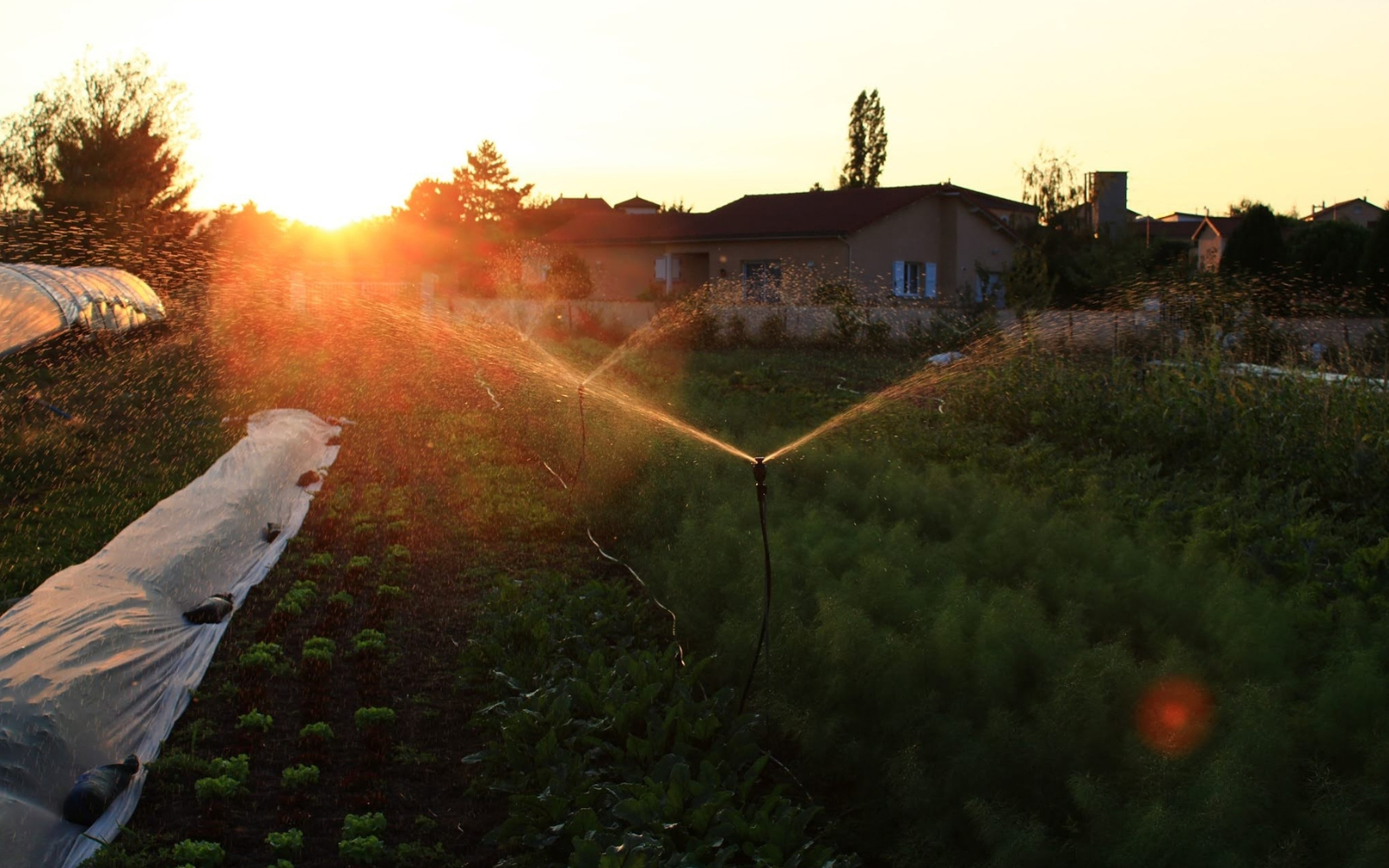
The field will always be cheaper to run. No heating, no trellising infrastructure, lower labor per square foot. But the greenhouse buys you something the field can’t: season length and yield density. A tomato plant that produces for 3 months in the field produces for 7 in a heated structure. That difference, multiplied across your highest-value crops, is where the real margin lives.
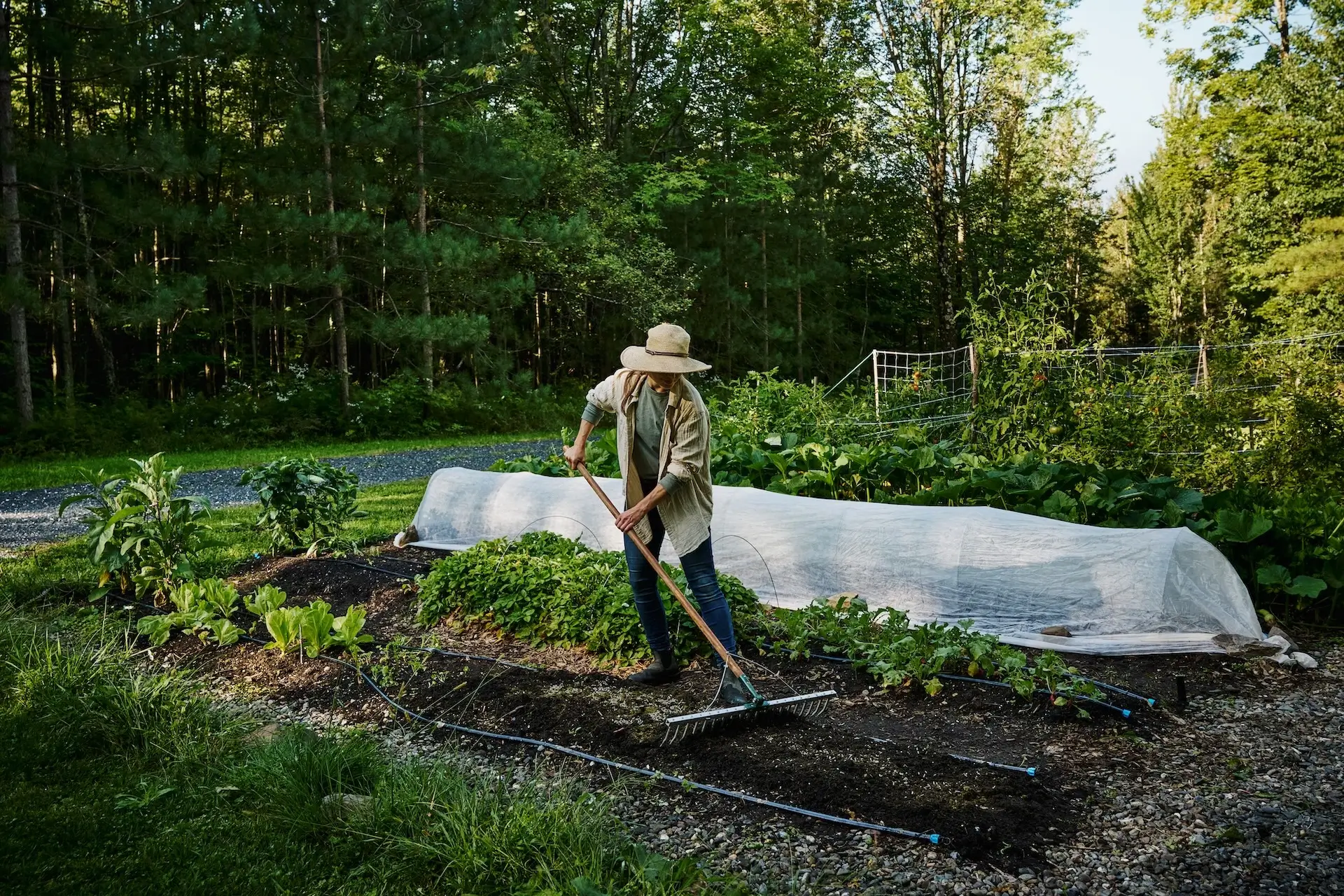
You don’t have to go all the way to a heated greenhouse to capture part of that gain. An unheated high tunnel, the kind built by Harnois Industries, or Tunnel Vision Hoops, already adds several weeks at each end of the season for a fraction of the operating cost. Heating then becomes a question of whether the extra months justify the fuel bill for the crops you’re growing.
The crops that belong in your greenhouse are the ones that reward the extra labor and heating cost with genuinely higher returns: tomatoes, cucumbers, peppers, eggplants, and pole beans when space allows. Everything else, honestly, probably grows better and cheaper in the field.
Final Thoughts
None of these techniques, the lowering and leaning, the three-head eggplant system, the EC-based fertilization schedules, are things you’ll pick up by trial and error in a season or two. It took me years of mistakes to refine them into a system that actually works, and that’s the exact system we teach, crop by crop, week by week, inside our Mastering Greenhouse Production Course. If you’re serious about making your greenhouse pay for itself, that’s where we go far deeper than any blog post ever could.