







If you’re growing vegetables, irrigation is the single biggest lever you have to control crop quality, reduce waste, and build the reputation of everything you grow. But here’s what most growers don’t realize: the way most people build their irrigation systems is backwards.
The problem isn’t just how you water. It’s that most growers build their irrigation systems without understanding the principles that make them work. They buy components. They install them. And then they spend the entire season fighting pressure issues, uneven water distribution, and dead zones. If this describes you, you’re not alone. And the good news is: it’s fixable.
The Biggest Irrigation Mistake Has Nothing to Do With Water
When I started farming more than twenty-five years ago, I thought irrigation was one of the easiest parts of growing vegetables. If the weather turned hot, I watered more. If the plants looked stressed, I watered longer. It seemed perfectly logical. More water meant healthier crops.
Except it didn’t.
I remember beds of carrots cracking just before harvest, lettuce developing disease seemingly overnight, and tomatoes that never reached their full potential. Some parts of the field stayed saturated while others dried out far too quickly. I wasn’t short on water—I simply didn’t understand what irrigation was supposed to accomplish.
At the time, I thought the goal was to deliver enough water to the plant.
Today, I see things very differently.
In an organic market garden, healthy crops don’t feed themselves. They rely on billions of bacteria, fungi, earthworms, and other soil organisms that transform organic matter into plant-available nutrients, build soil structure, and support healthy root development. None of that biology functions well in dry soil. As biological activity slows, nutrient cycling slows with it, and plants have access to fewer of the resources they need to grow. Long before you notice wilting leaves, the biology beneath the surface may already be limiting the crop’s potential.
Once I understood that, I stopped thinking about irrigation as a way of delivering water to plants. Instead, I began thinking about it as a way of managing soil biology. That single shift transformed not only the way I irrigated, but also the way I designed every market garden irrigation system I’ve built since.
From there, everything else—from drip irrigation and irrigation design to crop-specific watering strategies and your daily irrigation schedule—starts to make a lot more sense.
Why Most Growers Misunderstand Drip Irrigation
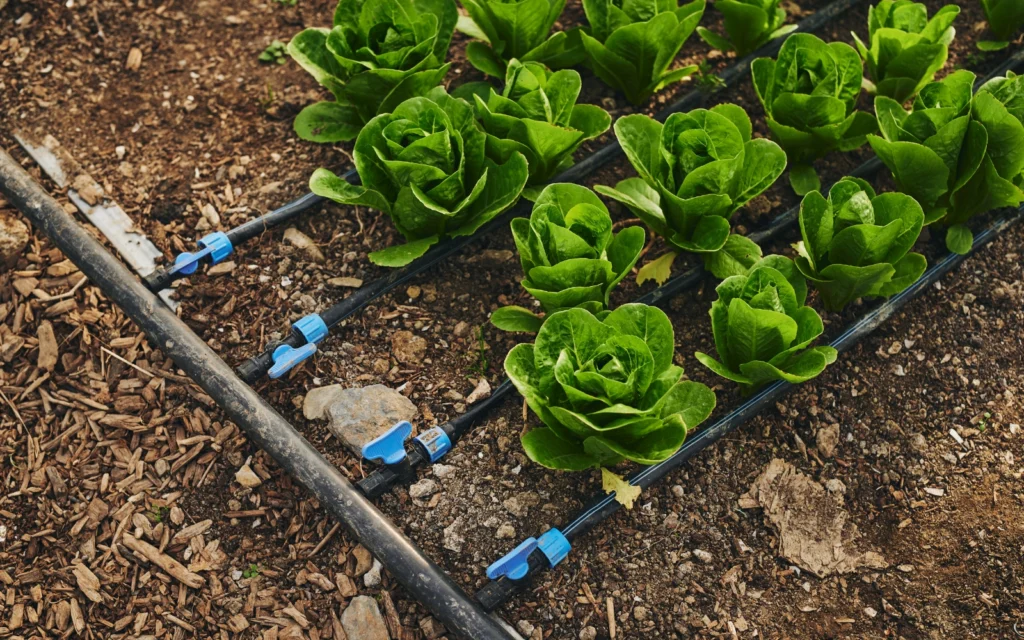
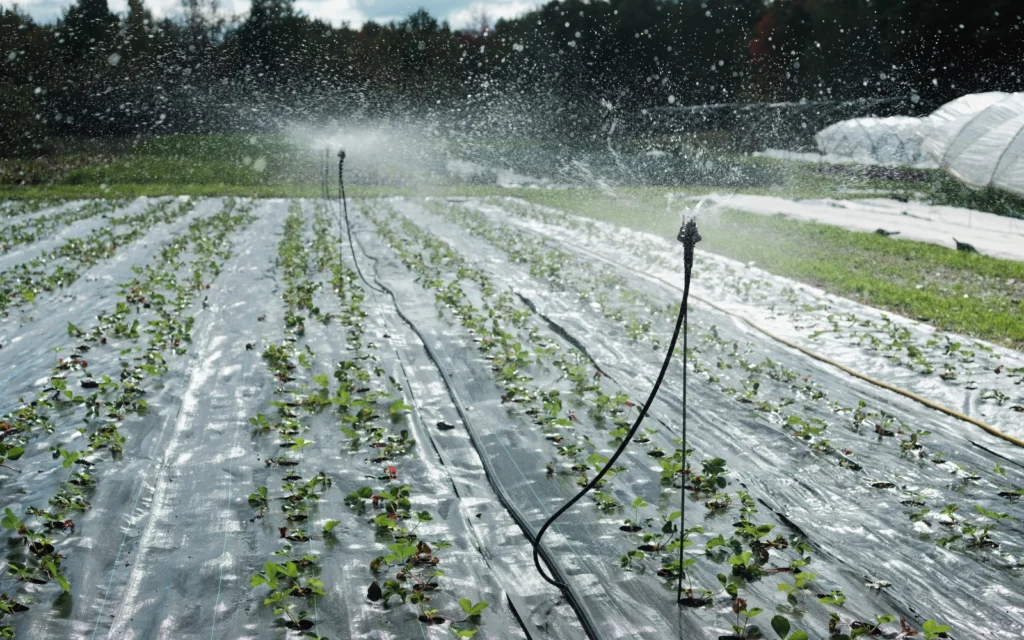
Drip irrigation is one of the greatest innovations in modern market gardening. I honestly can’t imagine running a productive market garden irrigation system without it. Compared to overhead irrigation, drip tape dramatically reduces water use, limits evaporation, minimizes weed pressure between the beds, and delivers moisture precisely where it is needed. The concept behind it is beautifully simple. Water moves slowly through a network of drip tape, applying moisture directly into the root zone rather than wetting an entire field. Every drop has a purpose. Very little is lost to evaporation or runoff, But this is also where I believe many growers misunderstand what drip irrigation is really trying to accomplish.
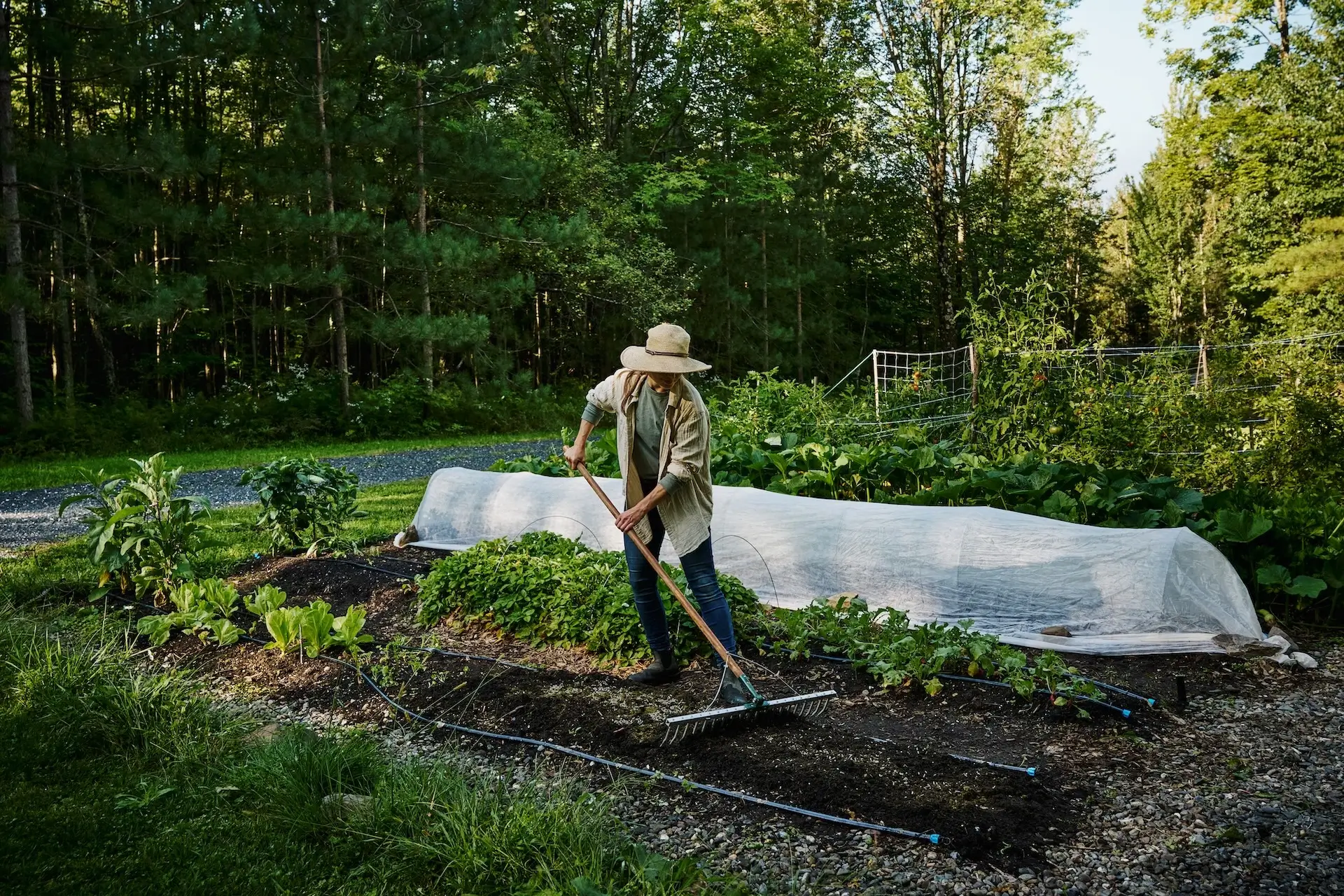
The goal isn’t simply to keep the plant alive while using as little water as possible. In an organic market garden, the real objective is to maintain a biologically active soil. Every time you irrigate, you’re not just supplying water to a crop—you’re creating the conditions that allow billions of bacteria, fungi, earthworms, and other soil organisms to remain active. This is one of the biggest differences between growing vegetables in living soil and growing them hydroponically. In hydroponics, nutrients are delivered directly to the roots through the irrigation water. In an organic system, the soil performs much of that work for you. Your responsibility as a grower is to keep that biological engine running. That’s why I often say that a dry soil isn’t simply a thirsty soil—it’s a less fertile soil. If I see only one or two drip lines on a 30-inch permanent bed, I know they’re primarily thinking about watering the plant. If I see four evenly spaced drip lines, I know they’re thinking about maintaining the entire root zone. That tells me they understand that irrigation isn’t just about the crop—it’s about keeping the soil alive.
My recommendation is simple: install four drip lines on every 30-inch permanent bed and place a shutoff valve on each one.
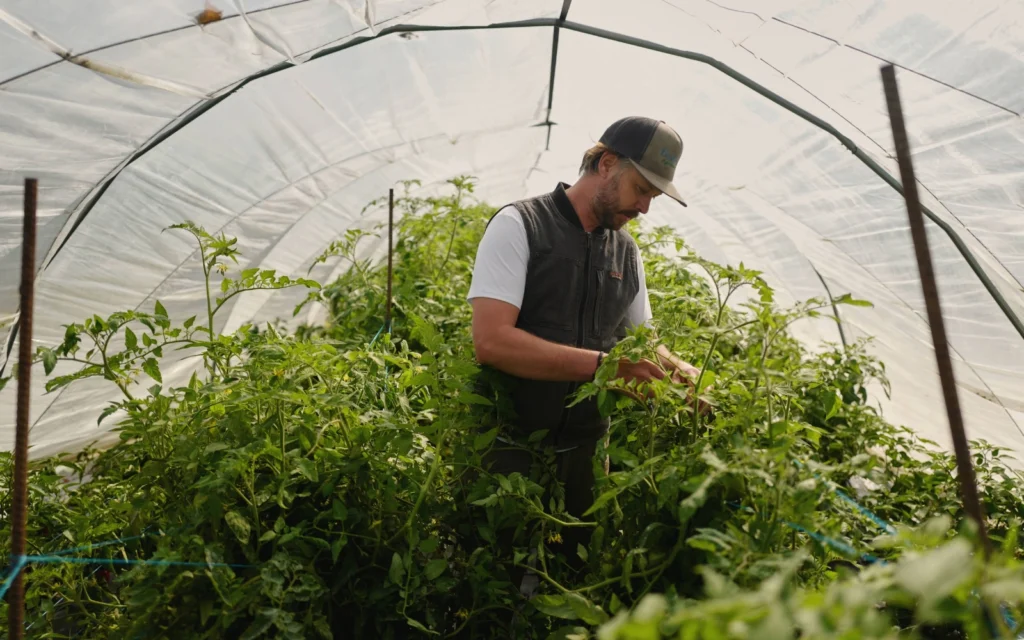
When you transplant a young tomato seedling, for example, the roots occupy only a small portion of the bed. During those first couple of weeks, you can irrigate using only the two center lines. As the plant grows and the roots colonize the entire bed, simply open the two outer lines. By mid-season, you’re no longer watering a small transplant—you’re maintaining an evenly moist, biologically active soil across the full width of the bed.
At first glance, this approach may seem like it uses more water, but the opposite is often true. Early in the season, you’re irrigating only the soil the crop is actually using. Later, as the canopy and root system expand, you’re supporting the biology of the entire bed, allowing nutrients, water, and roots to move freely through the soil profile.
That’s the difference between simply installing drip tape and designing a truly effective market garden irrigation system.
Different Crops Require Different Watering Strategies
Once you’ve understood that the goal of irrigation isn’t simply to water your crops, It’s to keep your soil alive, the next step is understanding that every crop should be irrigated in specific ways. Over the years, I’ve found it useful to group vegetables into three broad categories, each with its own watering strategy.
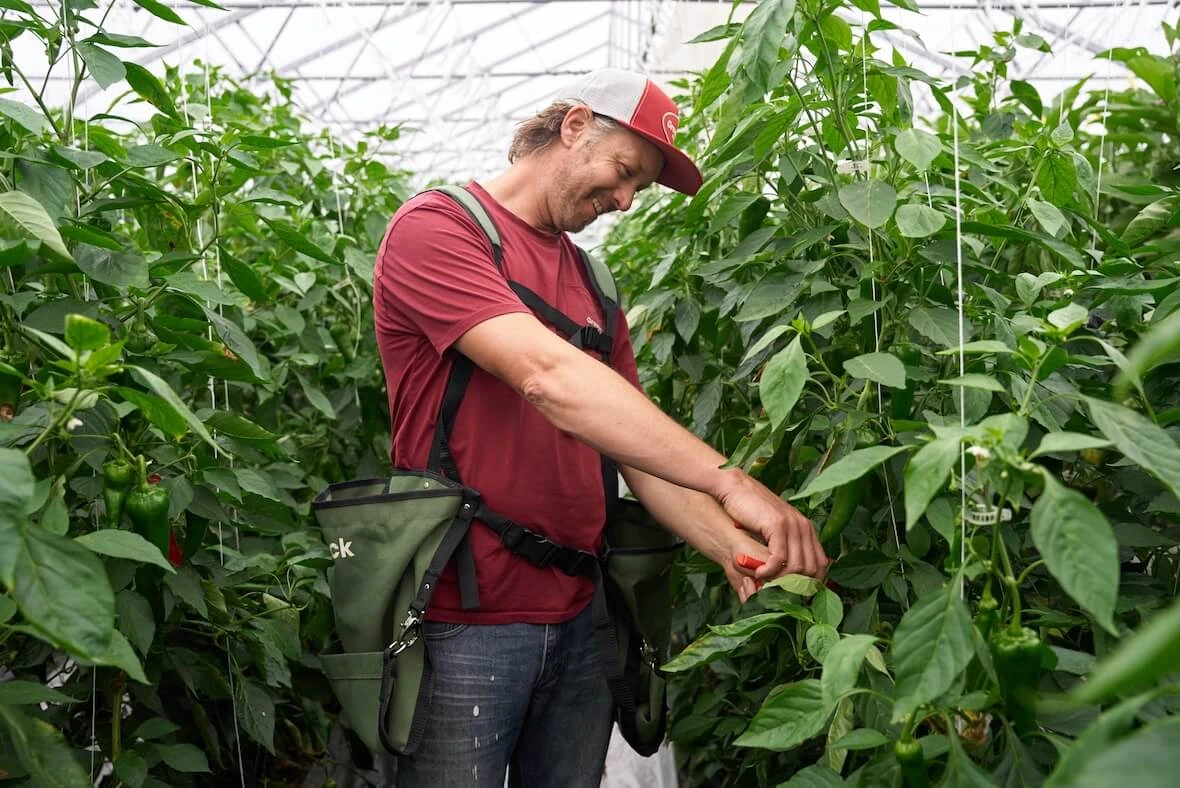
Fruiting crops (Tomatoes, peppers, cucumbers, eggplants, squash, melons, and other fruiting vegetables) perform best with drip irrigation. The objective is to maintain a consistently moist root zone while keeping the foliage as dry as possible. Wet leaves create ideal conditions for fungal diseases, and so these crops need to be bottom watered.
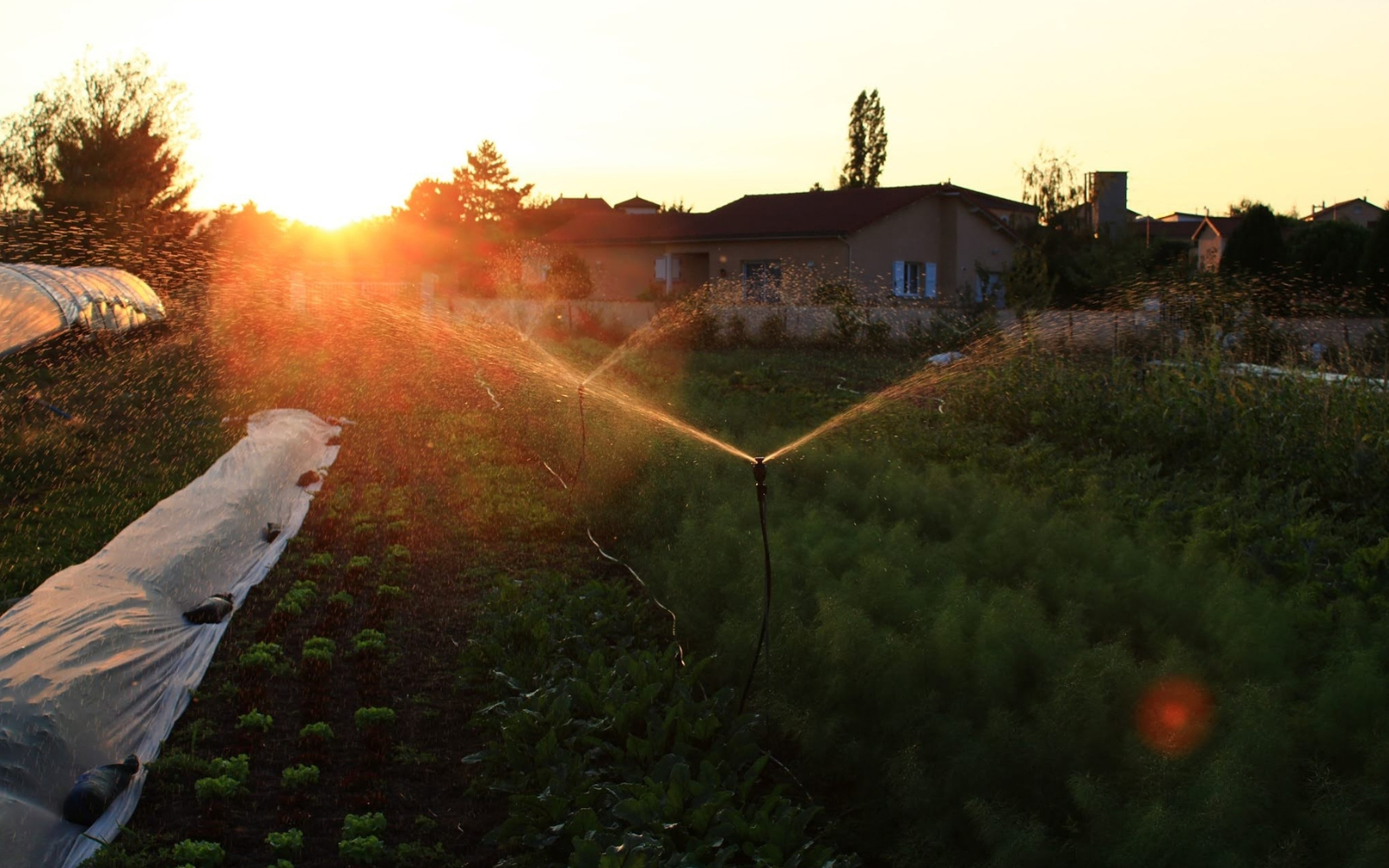
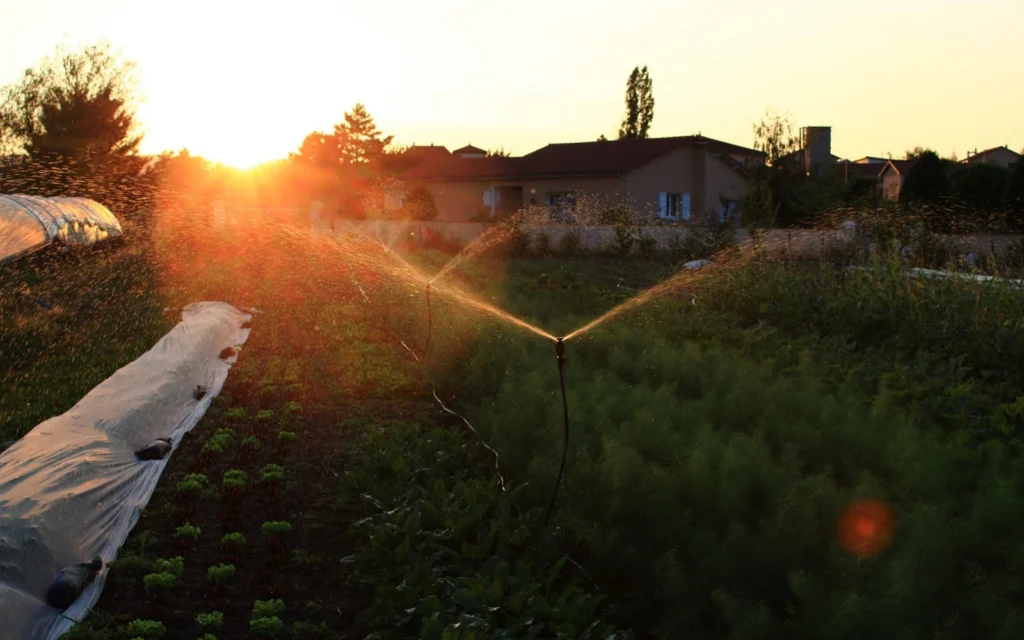
Leafy crops (Lettuce, spinach, Asian greens, arugula, kale, and salad mixes) generally respond better to overhead irrigation, especially during germination, establishment, and periods of hot weather., overhead watering cools both the crop and the soil surface, reducing heat stress and helping maintain the tenderness and quality that make these vegetables so desirable.
Root crops (carrots, beets, radishes, turnips, and parsnips) require yet another approach. During germination, they need frequent, light irrigations because the surface of the bed must never be allowed to dry out. Once established,I switch to drip irrigation whenever possible and water less frequently but more deeply: This encourages the roots to explore the soil profile instead of remaining near the surface, resulting in stronger plants and straighter, more uniform roots at harvest.
All in all these are simple rules to follow. The important lesson is that successful irrigation isn’t about following one schedule for the entire farm. It’s about understanding what each crop is trying to accomplish and adapting your watering strategy accordingly. But here’s where it gets complicated: knowing the concept is one thing. Knowing the exact water requirement for each crop at each growth stage—and building a system that delivers it—is another thing entirely.
How Much Water Does a Market Garden Really Need?
One of the questions I’m asked most often is, “How much should I water?” Like most questions in farming, the answer depends on your soil, your crops, the weather, and the stage of growth. But after more than twenty-five years of growing vegetables, I’ve found that one simple rule of thumb gets most growers surprisingly close.
In a temperate climate like the northeastern United States or eastern Canada, aim to provide approximately ½ inch (12–15 mm) of water per week. That total includes both rainfall and irrigation. Think of it as a baseline rather than a fixed target. During cool, cloudy weeks your crops may need less, while prolonged periods of hot weather—especially when daytime temperatures regularly climb above 30°C (86°F)—can easily double the crop’s water demand. Soil type also plays an important role. Sandy soils drain quickly and usually require more frequent irrigation, while heavier clay soils hold moisture much longer.
The mistake I see most often isn’t that growers don’t know this rule—it’s that they don’t know how much water they’ve actually applied. Many people irrigate based on how long the system has been running, assuming that thirty minutes today must be the same as thirty minutes last week. But different sprinklers, different drip tape, different pressures, and different soils all deliver very different amounts of water. Time alone tells you very little.
That’s why one of the most valuable tools in any market garden irrigation system isn’t a sophisticated controller or an expensive sensor.
It’s a simple rain gauge.
Place one in your garden and check it every week. It tells you exactly how much water nature has already provided, allowing you to irrigate only the difference. If the gauge shows you’ve received a quarter inch of rain, you know you only need about another quarter inch to reach your weekly target. Suddenly you’re no longer guessing. You’re measuring.
The same principle applies when checking soil moisture. Don’t rely on the appearance of the soil surface. The top half inch dries very quickly and can be misleading. Instead, push your finger two or three inches into the bed—or better yet, use a small trowel and look at the root zone itself. That’s where the real story is. Healthy irrigation decisions are made by observing the soil, not by watching the clock.
Over the years, I’ve learned that the best growers don’t irrigate because the calendar tells them to. They irrigate because the soil tells them it’s time. That simple shift—from guessing to measuring—will improve your irrigation more than almost any piece of equipment you can buy.
When Should You Water? When the Crop Needs It.
Knowing how much water to apply is only half the equation. Knowing when to apply it is just as important.
After more than twenty-five years of growing vegetables, I’ve found one rule that almost never lets me down: whenever possible, irrigate early in the morning.
There are several reasons for this.
First, morning irrigation allows foliage to dry before nightfall, dramatically reducing disease pressure. Wet leaves that remain cool throughout the night create ideal conditions for fungal diseases, particularly in tomatoes, cucumbers, and leafy greens. By watering early, the crop has the entire day to dry naturally.
Second, morning irrigation places moisture into the soil before the heat of the day begins pulling it back into the atmosphere. As temperatures rise, evaporation increases and plants begin transpiring rapidly. If the root zone is already well supplied with water, the crop can meet that demand without unnecessary stress.
Perhaps most importantly, morning irrigation matches the plant’s natural biology. As the sun rises, roots become active and begin absorbing both water and nutrients. By having moisture available at the start of the day, you’re supplying the crop precisely when it is preparing to grow. Watering late in the evening, on the other hand, often leaves the soil saturated during the coolest part of the night, when root activity slows and evaporation nearly stops. The result is frequently a wetter soil than the crop actually needs.
In our own market garden irrigation system, automated irrigation typically begins one to two hours after sunrise and finishes several hours before sunset. For most field growers, the principle is even simpler: whenever possible, try to finish your irrigation before nine o’clock in the morning.
Timing also changes throughout the life of a crop. Newly seeded beds and young transplants require frequent moisture because their roots occupy only the first inch or two of soil. Allow that surface layer to dry during germination, and you can lose an entire planting. Once the crop is established, however, the objective changes. Rather than keeping the surface constantly wet, you want to encourage roots to explore deeper into the soil profile by watering less frequently but more thoroughly. This develops stronger root systems and produces crops that are far more resilient during periods of drought.
Fruiting vegetables such as tomatoes, peppers, cucumbers, and eggplants demand even greater consistency once production begins. Large fluctuations in soil moisture often result in blossom-end rot, cracked fruit, uneven sizing, or flower abortion. Many growers assume these problems are nutritional, when in reality they often begin with inconsistent irrigation. Healthy plants aren’t built by watering more—they’re built by watering consistently.
Of course, there are moments when the rules bend. During prolonged heat waves, I will occasionally run a very short cycle of overhead irrigation on leafy crops such as lettuce, spinach, or celery during the hottest part of the afternoon. The goal isn’t to irrigate the crop again; it’s simply to cool the canopy and the soil surface enough to help the plants get through an exceptionally hot day. Think of it as climate management rather than irrigation.
Ultimately, the best irrigation schedule isn’t determined by the calendar or by the timer mounted on your pump house. It’s determined by what the crop needs at that particular stage of its life. Learn to read your plants, pay attention to your soil moisture, and they’ll tell you when it’s time to water.
Ready to Build Your System?
Understanding the principles of irrigation is one thing. Designing a market garden irrigation system that performs reliably, season after season, is another.
If this article changed the way you think about irrigation and you’d like to go deeper, we’ve created Watering by Design—a practical guide built from more than twenty-five years of growing vegetables and designing irrigation systems.
Inside, you’ll find crop-by-crop irrigation recommendations, seasonal watering strategies, guidance on pump sizing, pressure loss, irrigation zones, drip tape layout, manifold design, and the practical calculations that go into building an efficient market garden irrigation system.
We’ve also included the products and equipment we personally trust and use on our own farm. For irrigation supplies, valves, fittings, filters, and system components, I rely on Dubois Agrinovation. For overhead irrigation, I’ve become a strong believer in the Japanese-engineered, Sumi Soakers from Sumika, whose reliability has proven itself season after season.
If you’re ready to continue learning, I’d be happy to guide you further.
Watering by Design
A market gardener’s field guide to irrigation — the right amount of water, applied the right way, at the right time, for every crop you grow.